CONCEPT
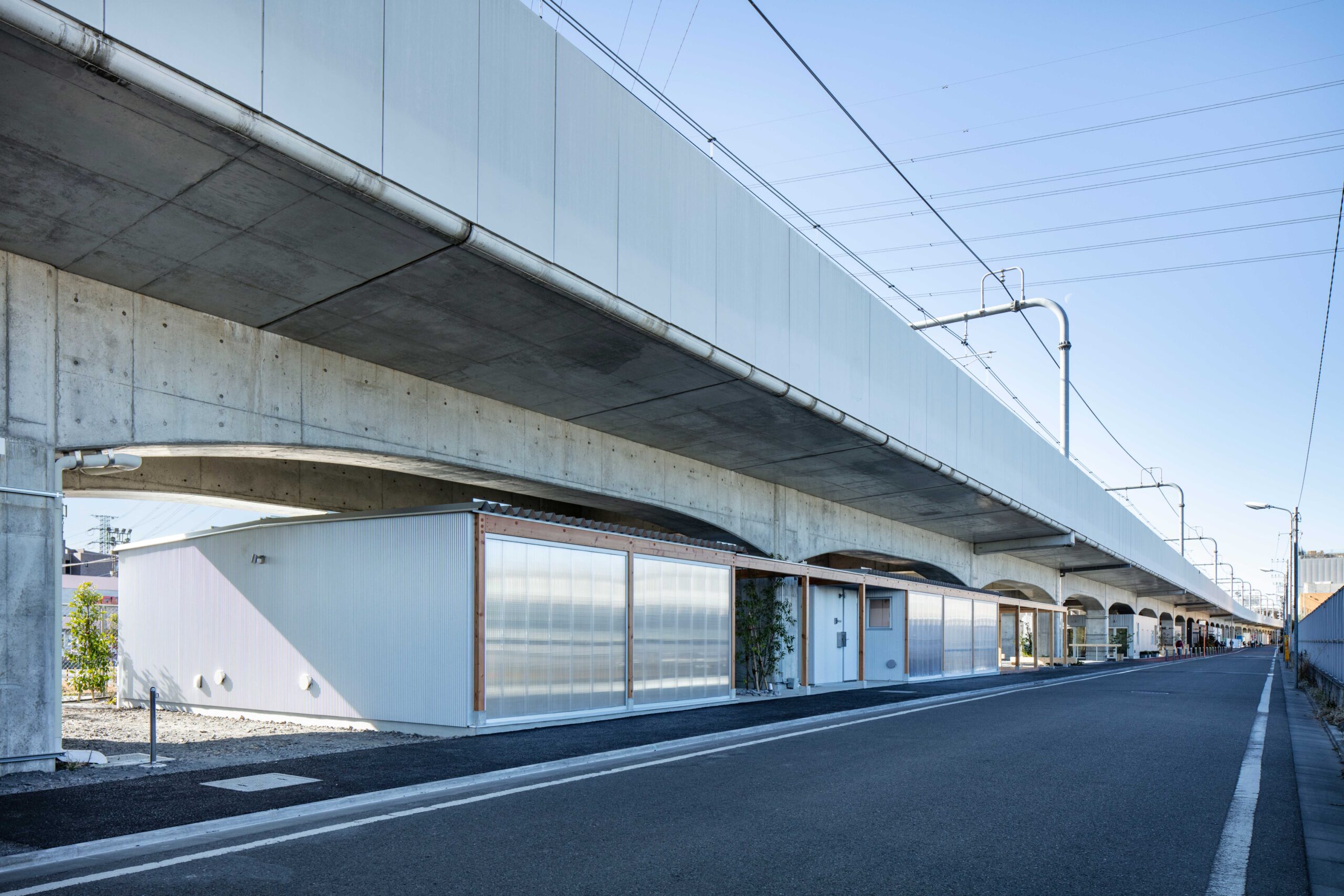
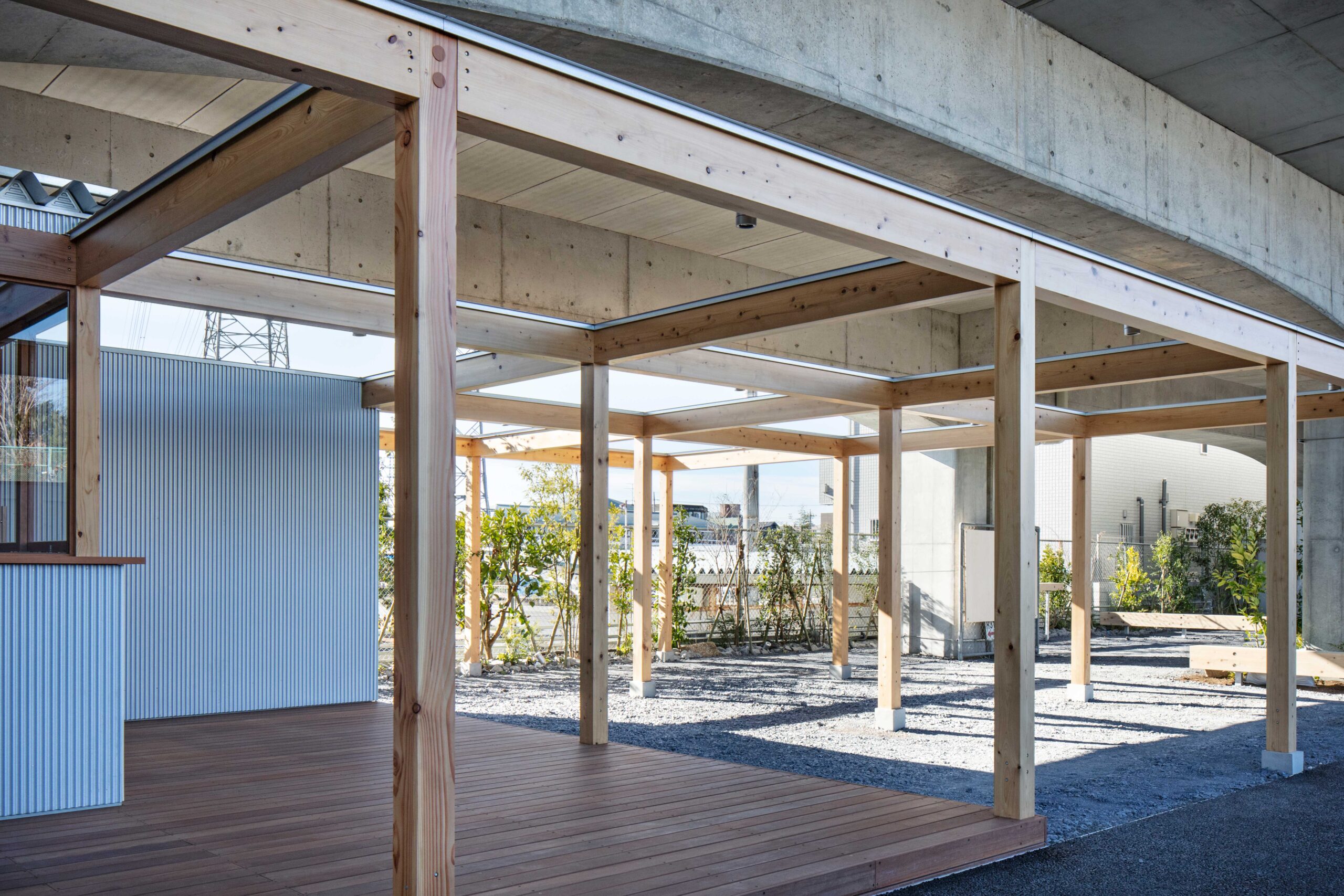
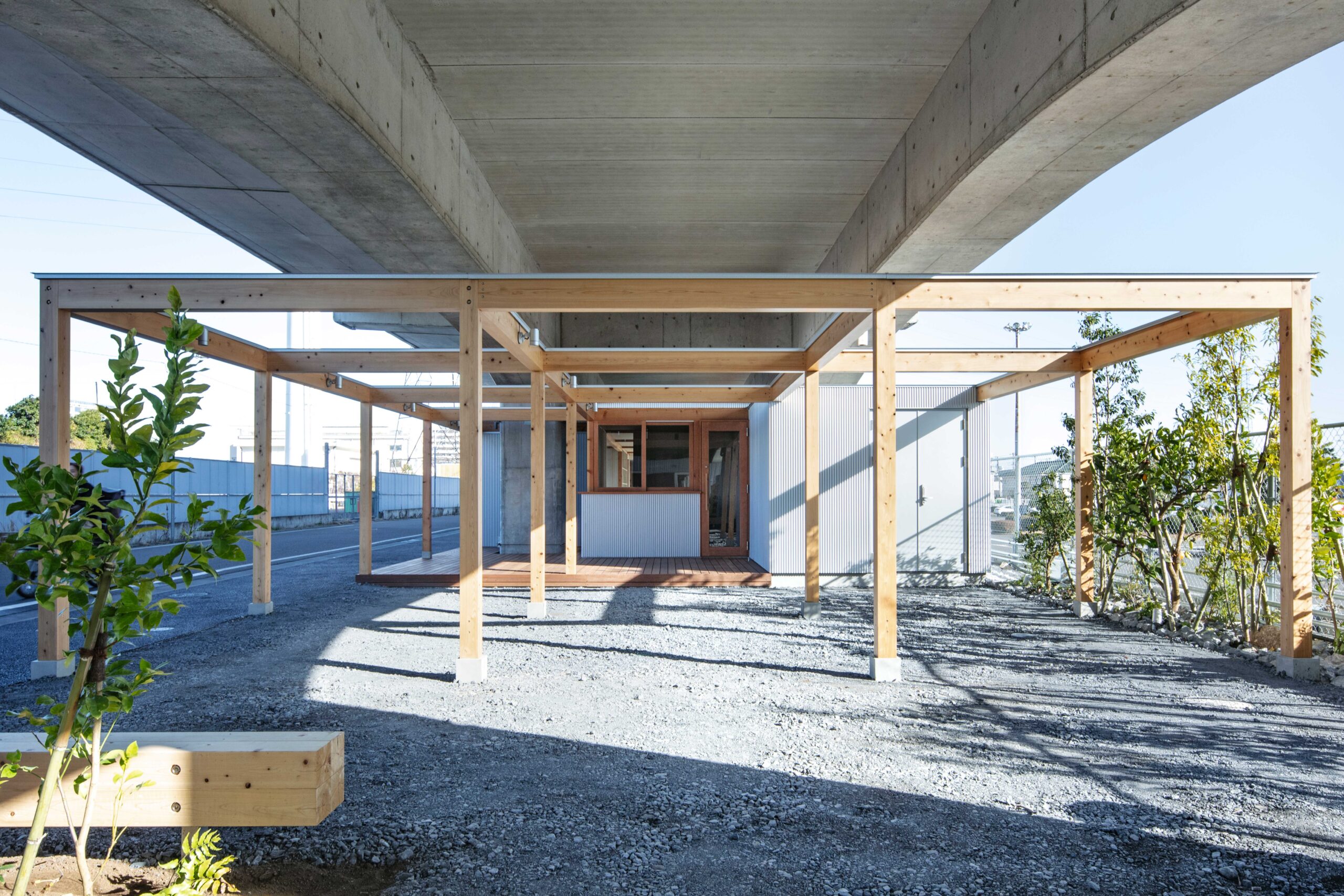
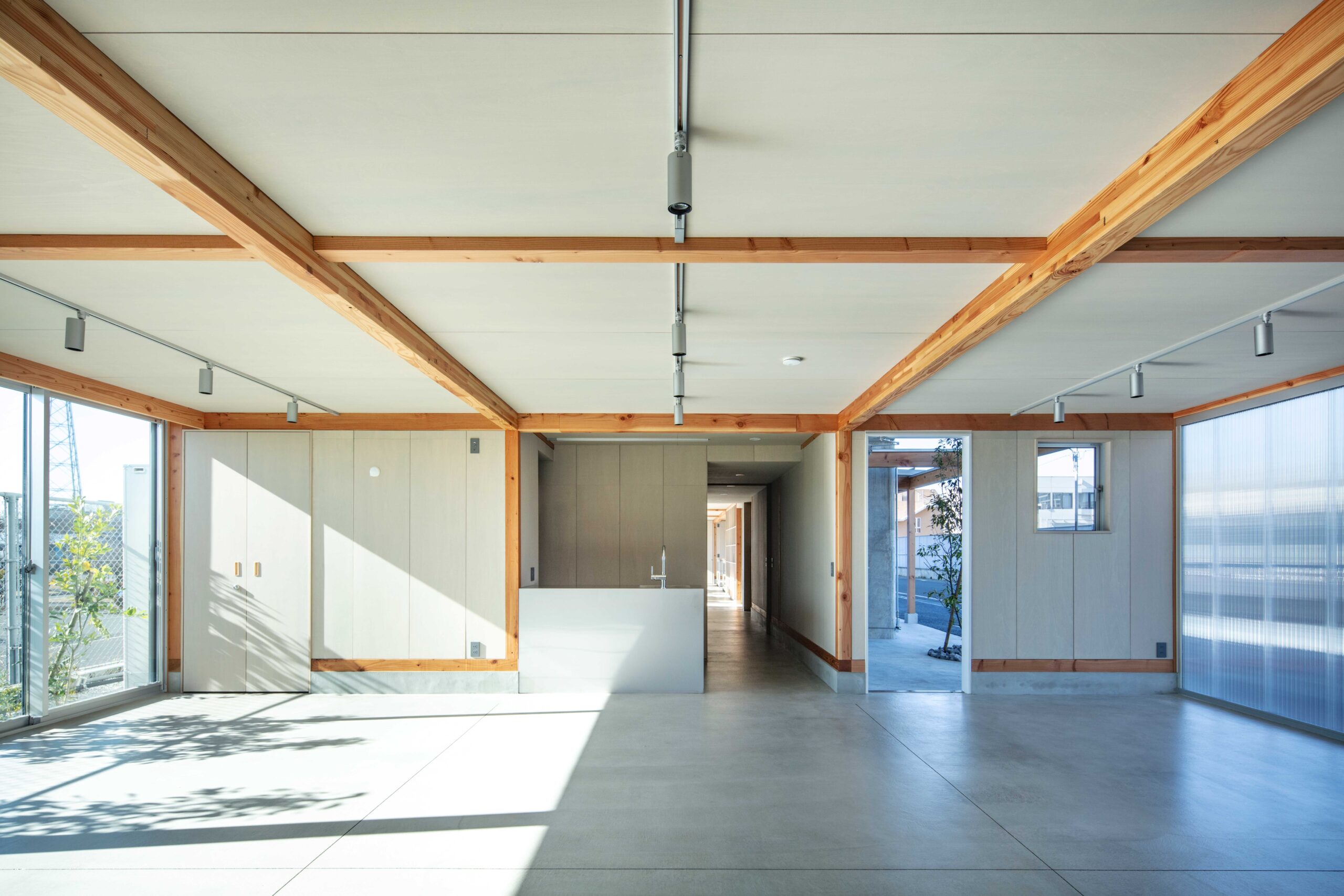
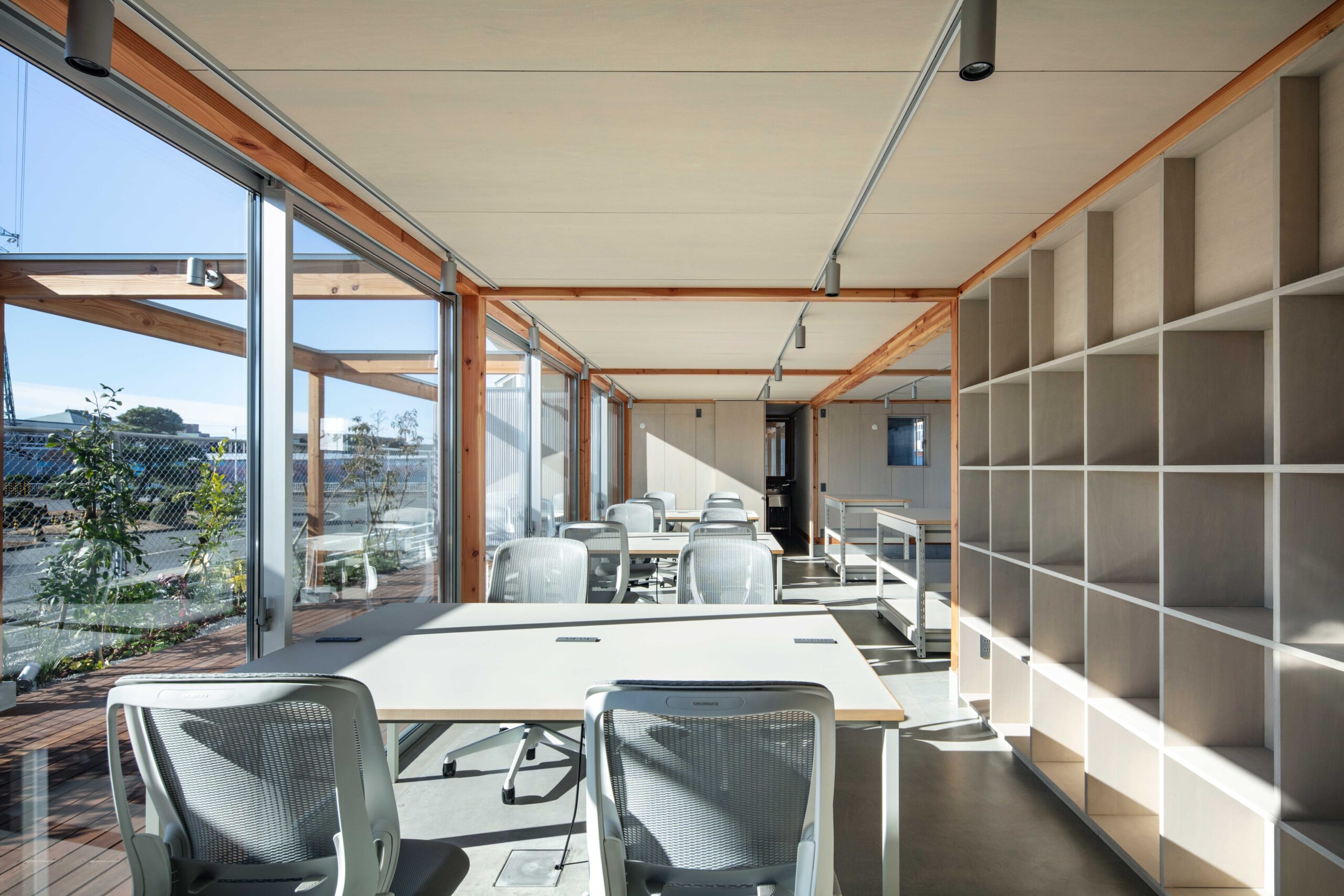
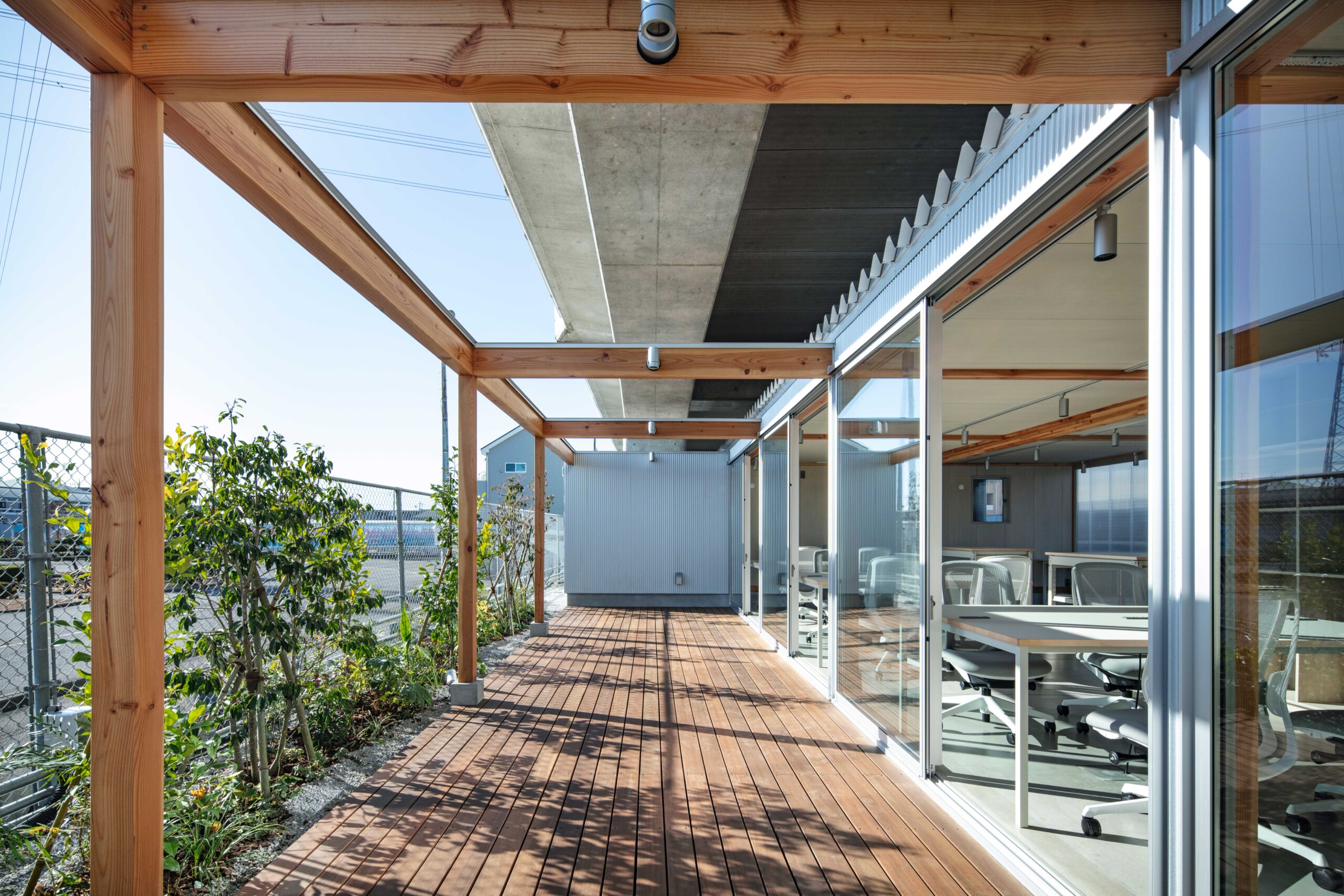
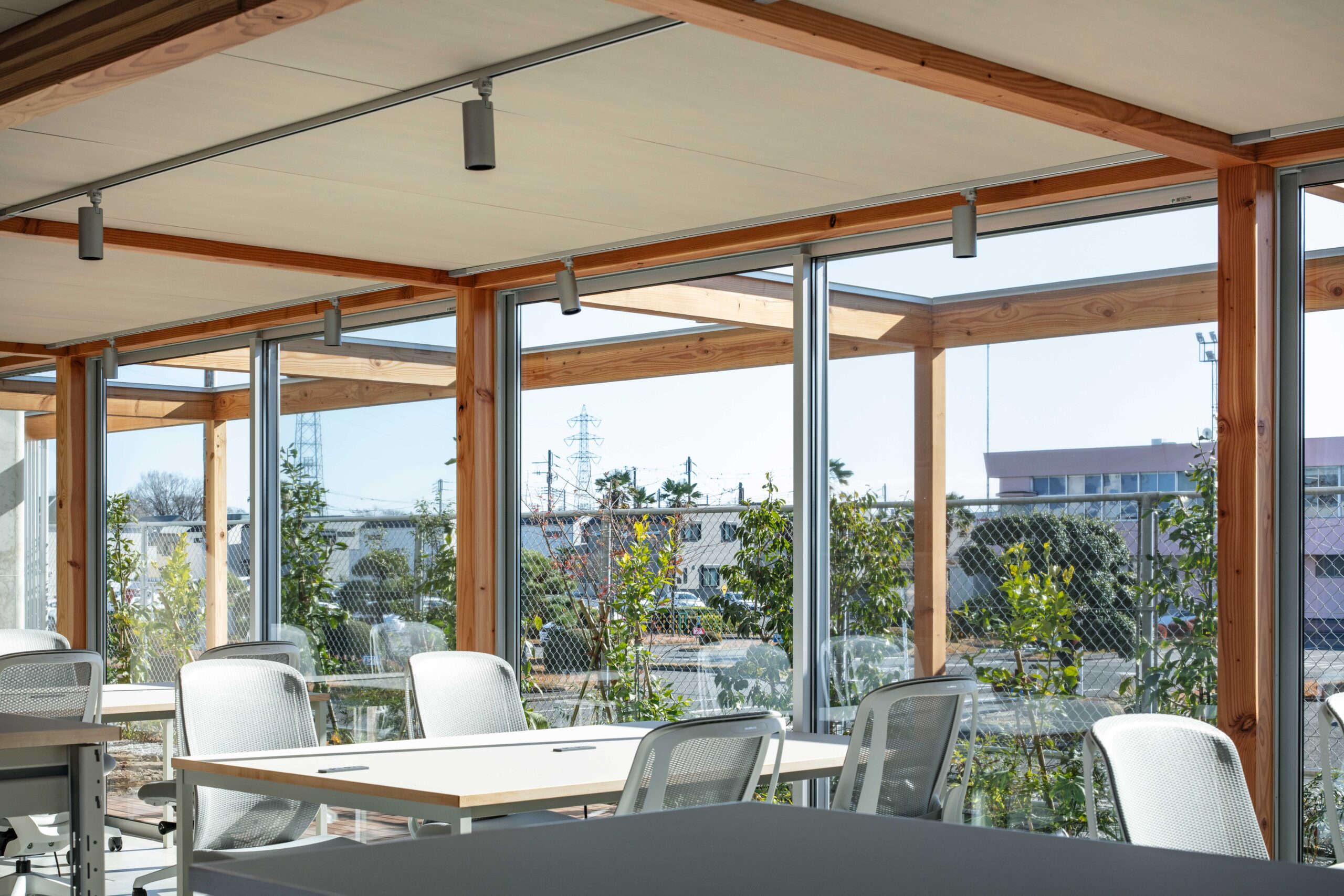
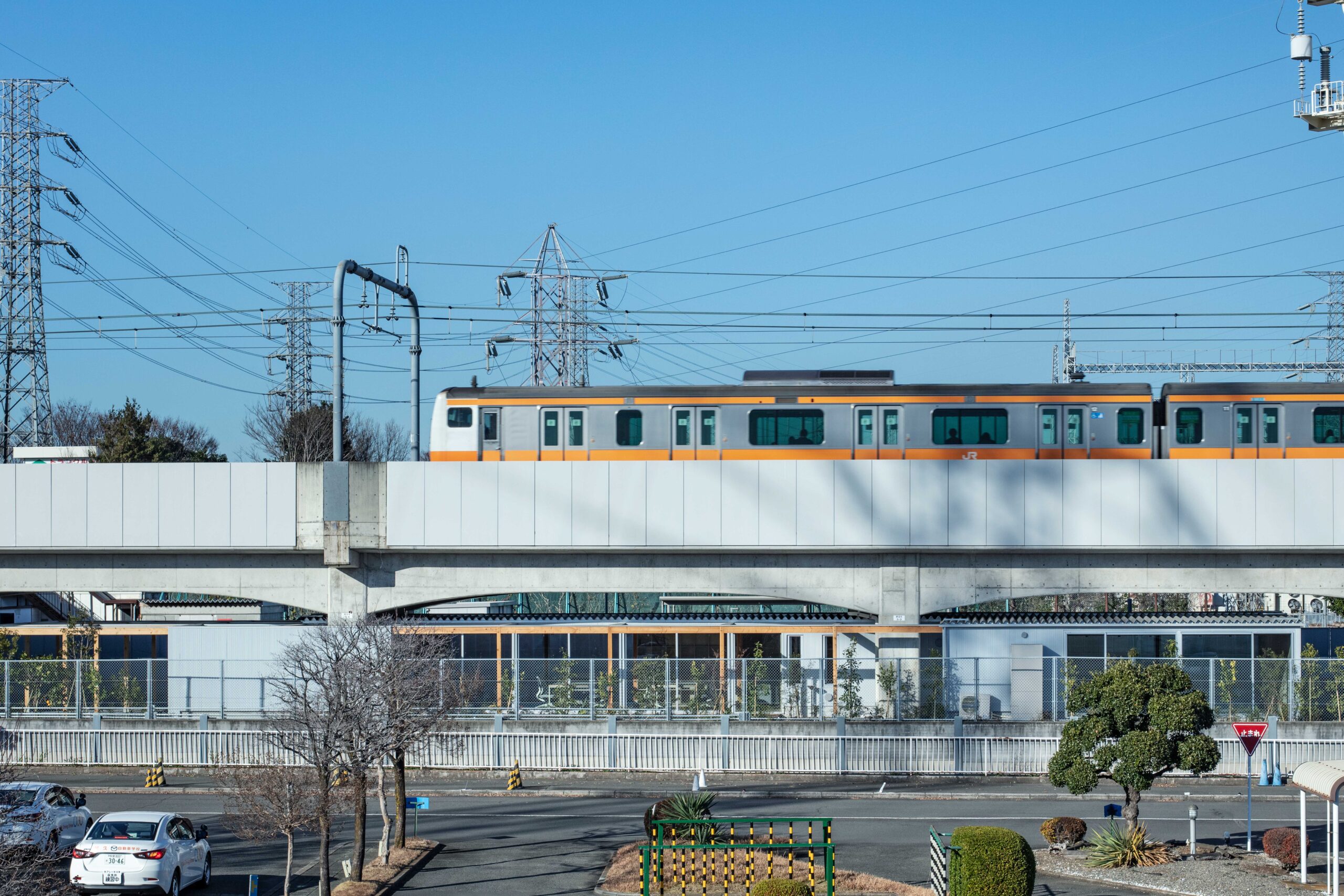
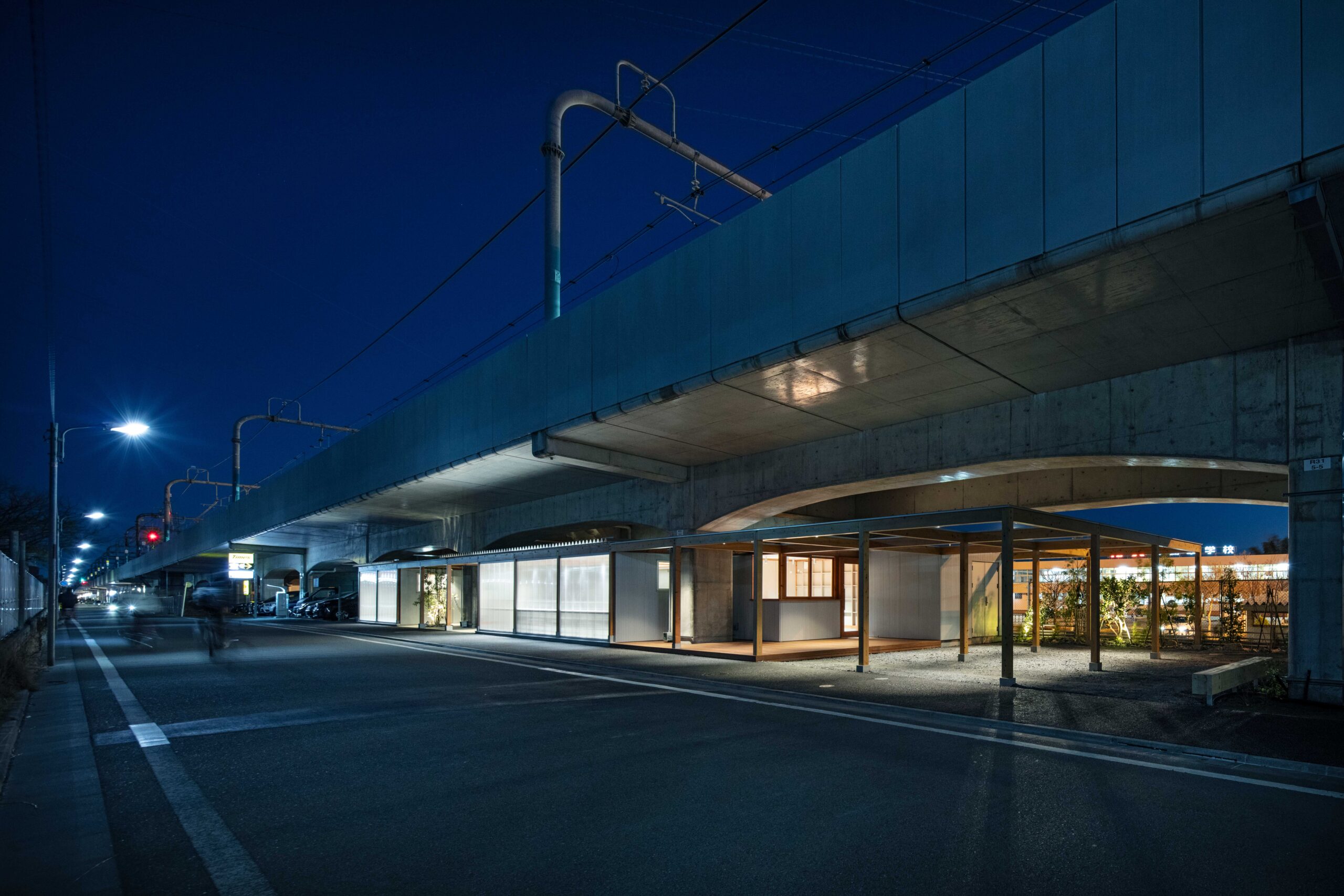
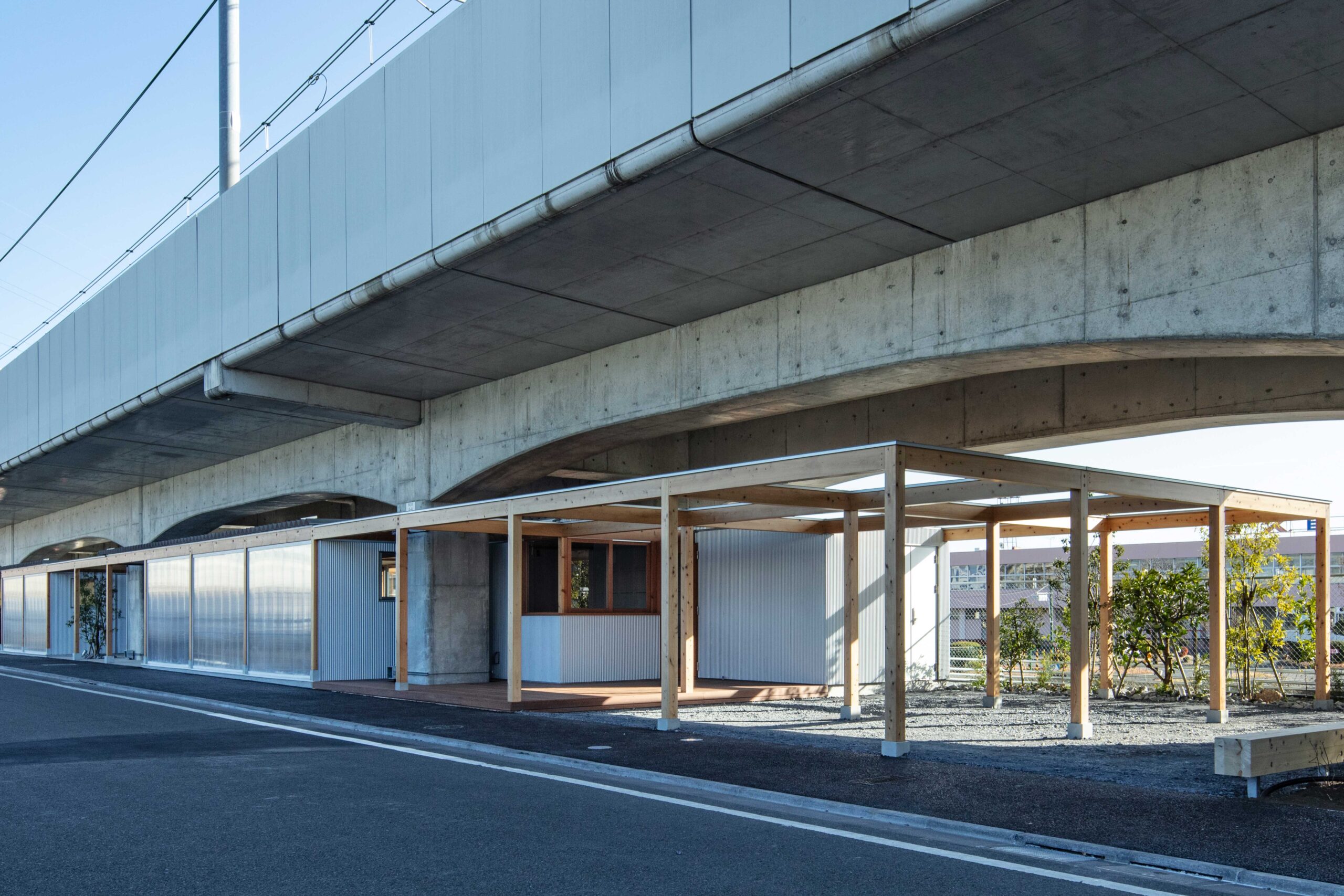
JR中央線高架鉄道下に、「住み」「働き」「商い」「集う」ための場所を設計した。 かつては線路に沿う第一種低層住居専用地域の一角であり、鉄道の高架化に伴い発生した敷地。全長9kmにも及ぶ長大な土木インフラはもはや人工的な地形とも呼べるスケールであり、日本一の長さを持つ高松中央商店街のアーケード2.7kmを超える。つまり街を超えたスケールの「都市の屋根」が既に整備されているわけである。それは、設計時において上棟された構造体を利用したリノベーションのような条件下となり、建築未満の内装や家具のような、柔らかで曖昧な環境装置を実現できるのではないか、と考えた。 巨大な高架下に柔らかな木造フレームを挿入し、その柱間に被膜をつくることで様々な居場所をつくっている。まだ仕上げ前の上棟時のような未達感を残しつつ、鴨長明の方丈庵のような、またキャンプ場のテントのような、生々しくも軽やかな場所を提供している。
We designed a space for "living," "working," "doing business," and "gathering" beneath the elevated JR Chuo Line railway tracks.
The site was formerly part of a low-rise residential zone along the tracks, and became available when the railway was elevated. The massive 9km-long civil engineering infrastructure is on a scale that could almost be called an artificial landscape, exceeding the 2.7km-long arcade of Takamatsu Central Shopping Street, the longest in Japan. In other words, a "roof of the city" on a scale beyond the city itself is already in place. This created a situation similar to a renovation utilizing an already-built structure, allowing us to realize a soft and ambiguous environmental device, like interior design or furniture that falls short of full architecture.
By inserting a soft wooden frame beneath the massive elevated tracks and creating a membrane between the columns, we created various spaces. While retaining a sense of incompleteness, like a framed structure before finishing, it offers a raw yet light space, reminiscent of Kamo no Chomei's Houjouan or a campsite tent.